
- 7.1 — Where People Live
- 7.1.1 — Reasons for Variations in Global Urban Growth Rates
- 7.1.2 — Causes of Rapid Urban Growth in LICs
- 7.2 — Opportunities and Challenges of Urbanisation
- 7.2.1 — Opportunities of Urban Living
- 7.2.2 — Opportunities and Challenges of Rapid Urban Growth
- 7.2.3 — The Impact of Urban Sprawl on the Rural–Urban Fringe
- Syllabus Reference
More than half of all people on Earth now live in towns and cities. This shift from rural (countryside) to urban (city) living is called urbanisation, and it is happening at very different speeds in different parts of the world. In this topic, you will learn why urban areas are growing, what opportunities city life brings, and what challenges come with rapid urban growth.
7.1 — Where People Live #
7.1.1 — Reasons for Variations in Global Urban Growth Rates #
The urban growth rate is how fast the population of towns and cities is growing. This rate is not the same everywhere — some cities are growing very quickly while others are barely growing at all.
The process by which the proportion of people living in urban areas (towns and cities) increases over time.
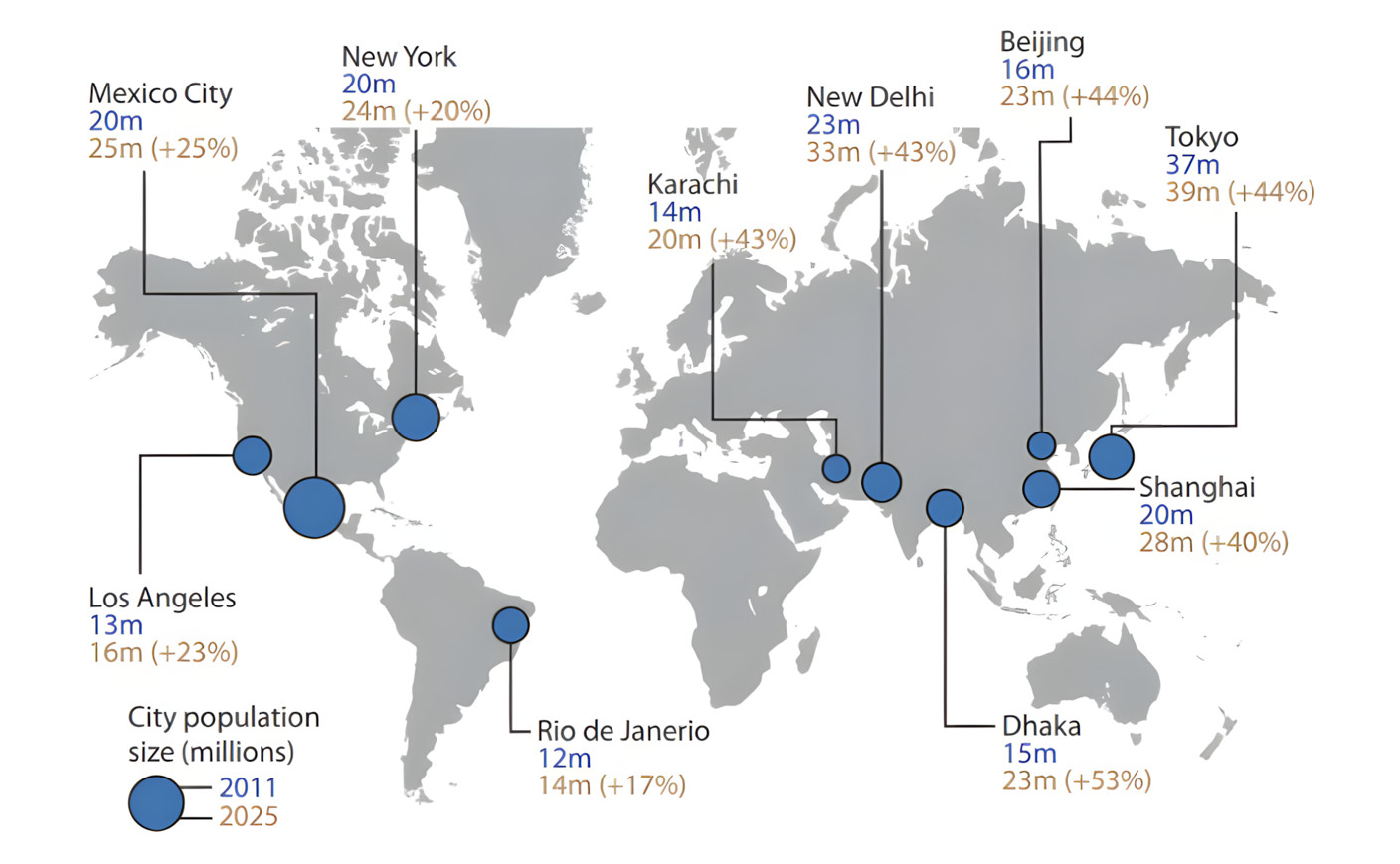
The main reasons why urban growth rates vary around the world:
| Factor | Slower Urban Growth (typically HICs) | Faster Urban Growth (typically LICs/MICs) |
|---|---|---|
| Level of development | Already highly urbanised — most people already live in cities, so there is little room left to grow | Still mostly rural — large numbers of people are yet to move to cities |
| Birth rate | Low birth rates mean city populations grow slowly from natural increase | High birth rates lead to rapid natural increase in urban areas |
| Rural–urban migration | Little migration from rural areas as rural living standards are already reasonable | Large numbers of people move from the countryside to cities in search of better opportunities |
| Economic activity | Cities in HICs are well-established; growth is slower and more controlled | Rapid economic growth in LIC cities attracts workers and investment |
7.1.2 — Causes of Rapid Urban Growth in LICs #
Cities in Low Income Countries (LICs) are growing at some of the fastest rates in the world. There are two main causes: rural–urban migration and natural increase.
Rural–Urban Migration #
This is when people move from the countryside to towns and cities. People are pushed away from rural areas and pulled towards cities by a range of factors:
| Type of Factor | Push Factors (reasons to leave the countryside) | Pull Factors (reasons to move to the city) |
|---|---|---|
| Social | Poor access to schools and healthcare in rural villages | Better schools, universities, hospitals, and social services in cities |
| Economic | Few jobs available; farming income is low and unreliable | More job opportunities, higher wages, greater chance to improve income |
| Environmental | Drought, flooding, or land degradation makes farming impossible or very difficult | Cities are less dependent on weather and natural conditions for income |
| Political | Conflict or war in rural areas forces people to flee for safety | Governments often invest more in cities, making them safer and better-resourced |
Natural Increase #
Natural increase is when more people are born than die in a given area. In LIC cities, natural increase is high because:
- Many migrants who move to cities are young adults who then have children, so birth rates in cities are high
- Better access to healthcare in cities reduces death rates, especially among babies and young children
- The result is a large and fast-growing young urban population
7.2 — Opportunities and Challenges of Urbanisation #
7.2.1 — Opportunities of Urban Living #
Living in a city brings many advantages that are not as easily available in the countryside. These opportunities are one of the main reasons people choose to move to urban areas.
| Opportunity | What This Means |
|---|---|
| Culture | Cities offer a rich and diverse cultural life — museums, theatres, art, music, festivals, and a mix of traditions from different communities |
| Housing | A wider variety of housing types is available in cities, from apartments to larger homes, compared to limited options in rural areas |
| Services | Cities have better hospitals, schools, universities, and public transport systems, giving residents greater access to essential services |
| Leisure | Parks, sports facilities, cinemas, restaurants, and other leisure activities are concentrated in urban areas |
| Consumption | Cities offer access to a much wider range of goods and products through shops, markets, and online delivery systems |
| Economic development | Cities are centres of business and industry, offering more jobs, higher wages, and greater opportunities to start businesses and build wealth |
7.2.2 — Opportunities and Challenges of Rapid Urban Growth #
When cities grow very quickly, they bring both new opportunities and serious challenges. Below are the key areas the syllabus requires you to understand.
Inequality #
- Cities create wealth that can, over time, be used to improve living standards for more people
- Access to education and employment gives some individuals the chance to move out of poverty
- The gap between rich and poor is often very wide in rapidly growing cities
- Wealthy areas with good services exist alongside areas of extreme poverty
- Low-income residents are often excluded from the economic benefits of city growth
Service Provision #
- Cities can provide better healthcare, education, and utilities than rural areas
- Concentration of people makes it more cost-effective to deliver services
- When cities grow faster than services can be built, hospitals, schools, and water supplies become overwhelmed
- Poorer districts often receive fewer services than wealthier ones
Housing #
- Cities can invest in large-scale housing programmes to shelter growing populations
- A variety of housing types can accommodate different income levels
- Rapid population growth leads to housing shortages and overcrowding
- House prices and rents rise, making housing unaffordable for low-income residents
- Many people are forced to live in poor-quality, overcrowded conditions
Employment #
- Cities offer a greater range and number of jobs than rural areas
- Economic growth in cities creates new industries and businesses
- The number of people arriving often exceeds the number of jobs available
- Many workers end up in low-paid, insecure informal jobs (e.g. street selling, casual labour) with no legal protection
Transport #
- Cities can develop bus, rail, and metro networks that connect large numbers of people efficiently
- Good transport links help businesses and workers access each other
- Traffic congestion is a major problem as car ownership and population increase together
- Air pollution from vehicles damages health
- Public transport infrastructure struggles to keep pace with rapid growth
Waste Management #
- Cities can invest in organised waste collection, recycling, and treatment systems
- Rapidly growing cities produce enormous amounts of rubbish that is difficult to collect and dispose of safely
- Inadequate waste systems lead to pollution of water, land, and air, causing serious health problems
- Unplanned settlements often have no waste collection at all
Unplanned Settlements #
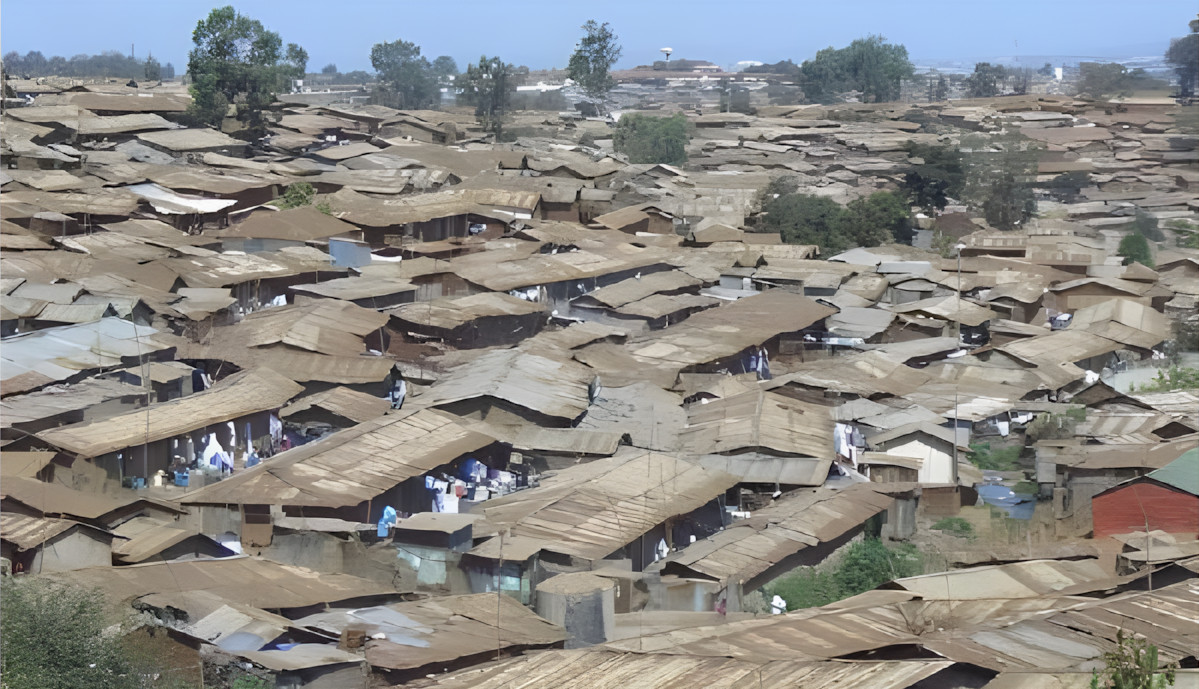
Areas of housing built by residents on land they do not own and without permission from the government. They grow rapidly when people arriving in a city cannot afford formal housing.
- Residents often build strong local communities and support networks
- Over time, some settlements are upgraded by governments into permanent, legal neighbourhoods
- Housing is often built from temporary or unsafe materials
- Little or no access to clean water, sewage systems, or electricity
- Overcrowding and poor sanitation lead to the spread of disease
- Residents have no legal ownership of the land and can be forcibly removed
7.2.3 — The Impact of Urban Sprawl on the Rural–Urban Fringe #
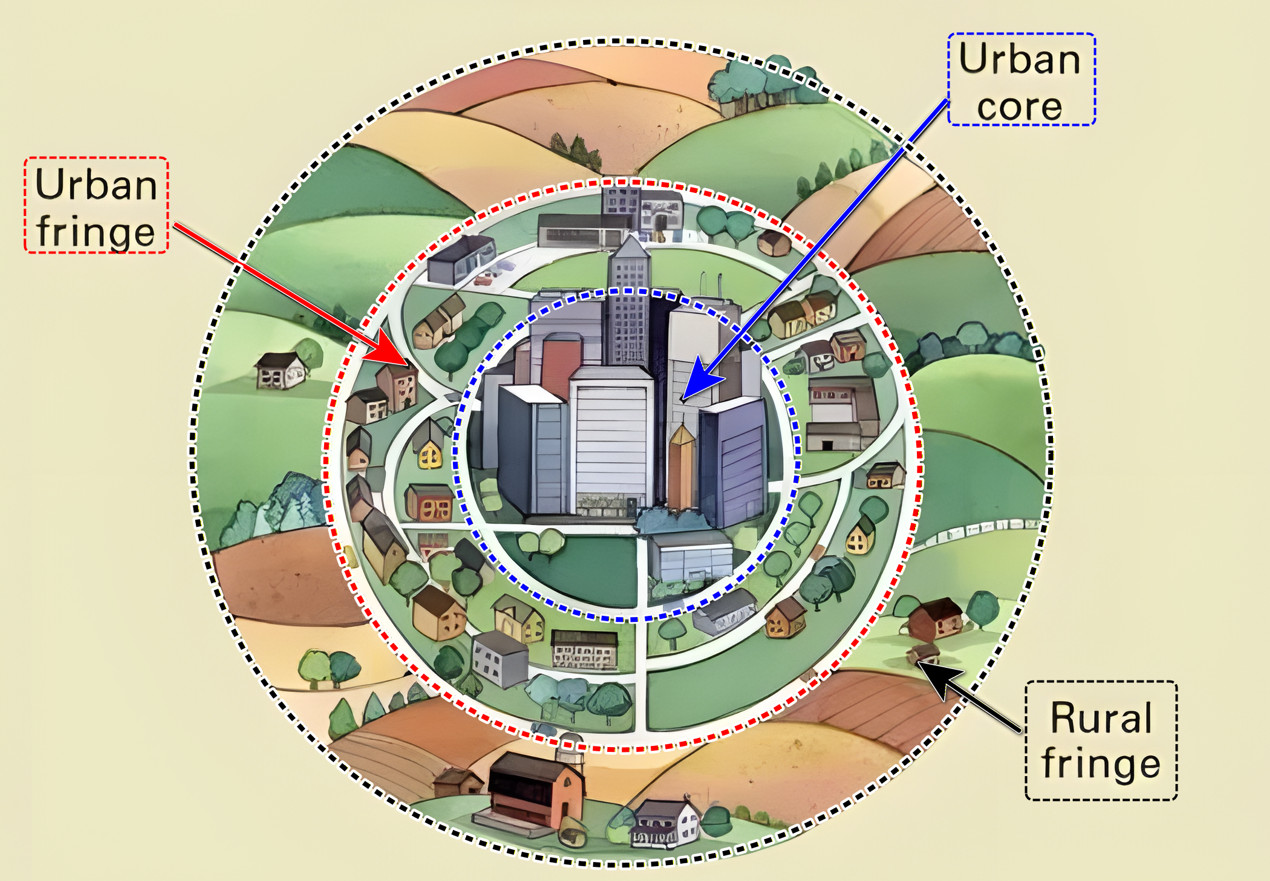
The outward spread of a city into the surrounding countryside, as the city grows and new housing, roads, and businesses are built on the edge of the urban area.
The zone at the edge of a city where urban (city) land uses and rural (countryside) land uses meet and mix together.
As cities expand outwards, the rural–urban fringe is the area most directly affected by urban sprawl. The impacts are significant and wide-ranging:
| Impact | Explanation |
|---|---|
| Loss of farmland | Agricultural land is built over to create new housing estates, roads, and retail areas, permanently reducing the land available for food production |
| Loss of green space and habitats | Natural areas such as fields, woodland, and wetlands are destroyed as the city expands, reducing biodiversity and removing areas that residents previously used for recreation |
| Increased traffic | New residential areas on the fringe rely heavily on cars, leading to more congestion and air pollution on rural roads and in nearby villages |
| Pressure on local services | An influx of new residents increases demand for schools, doctors, and roads in areas that were not designed to handle large urban populations |
| Changes to the character of rural settlements | Villages near the city edge can lose their rural character as they become absorbed into the growing urban area, with house prices rising beyond the reach of local rural communities |
| New economic activity | Out-of-town shopping centres, business parks, and industrial estates are built on the fringe where land is cheaper and there is room to expand |
Syllabus Reference #
| Section | Syllabus Point |
|---|---|
| 7.1.1 | Reasons for variations in global urban growth rates. |
| 7.1.2 | Causes of rapid urban growth in LICs: rural to urban migration, social, economic, environmental, and political factors, natural increase. |
| 7.2.1 | Opportunities of urban living, for example, culture, housing, services, leisure, consumption, economic development. |
| 7.2.2 | The opportunities and challenges of rapid urban growth: inequality, service provision, housing, employment, transport, waste management, unplanned settlements. |
| 7.2.3 | The impact of urban sprawl on the rural–urban fringe/surrounding areas. |


