
IGCSE Biology | Transport in Humans
Blood does not flow freely through the body — it travels through a network of tubes called blood vessels. There are three types: arteries, veins, and capillaries. Each type has a different structure, and that structure is perfectly matched to its job and the pressure of the blood inside it.
1. The Main Named Blood Vessels #
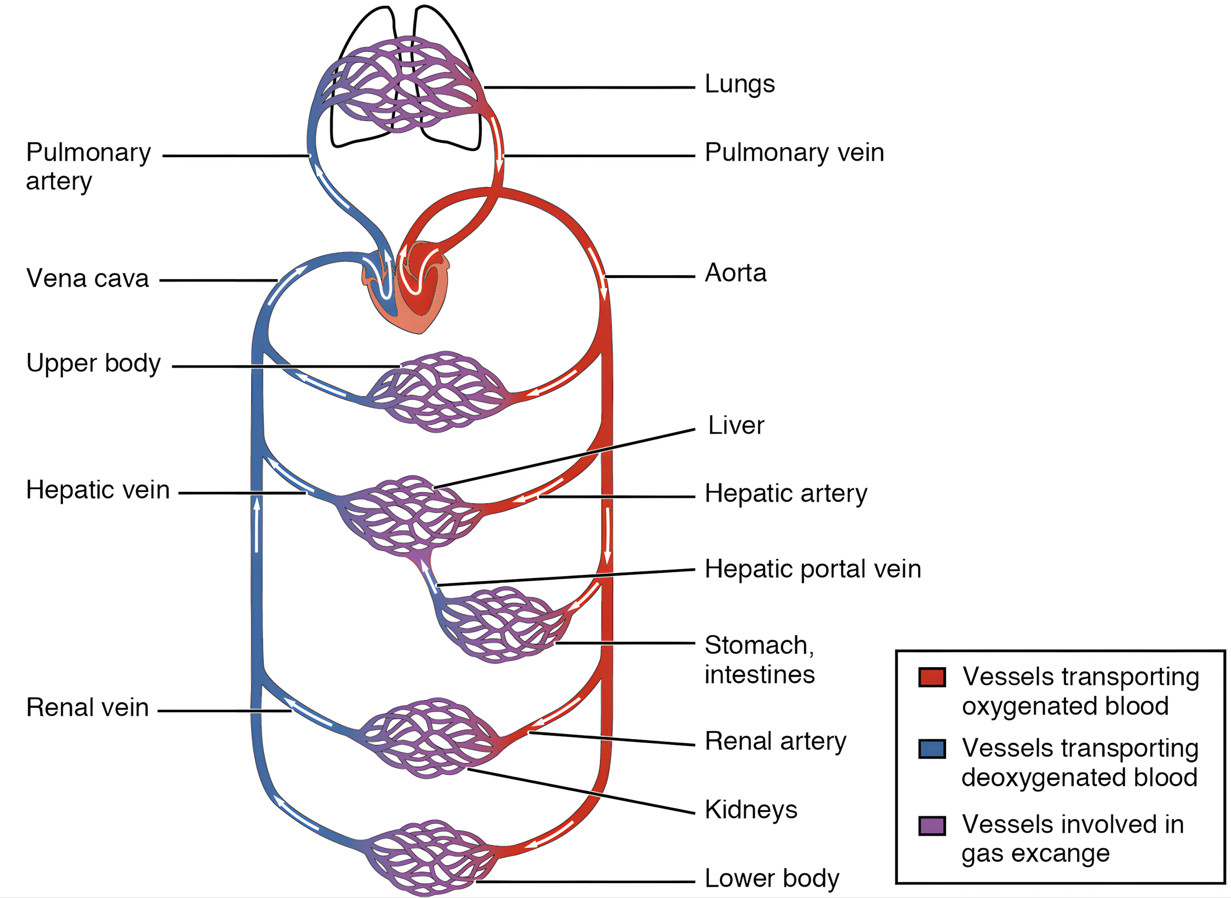
Several important blood vessels connect the heart to specific organs. You need to know their names and what they carry.
Heart and Lungs #
| Vessel | Connects | Carries |
|---|---|---|
| Aorta | Left ventricle → body | Oxygenated blood to the whole body |
| Vena cava | Body → right atrium | Deoxygenated blood back from the body |
| Pulmonary artery | Right ventricle → lungs | Deoxygenated blood to the lungs |
| Pulmonary vein | Lungs → left atrium | Oxygenated blood back from the lungs |
Liver #
| Vessel | Connects | Carries |
|---|---|---|
| Hepatic artery | Aorta → liver | Oxygenated blood to the liver |
| Hepatic vein | Liver → vena cava | Deoxygenated blood from the liver back to the heart |
| Hepatic portal vein | Small intestine → liver | Blood rich in digested food (glucose, amino acids) from the gut to the liver for processing |
Kidneys #
| Vessel | Connects | Carries |
|---|---|---|
| Renal artery | Aorta → kidney | Oxygenated blood (containing urea and other waste) to the kidneys for filtering |
| Renal vein | Kidney → vena cava | Filtered blood (urea removed) back to the heart |
2. Structure of Arteries, Veins, and Capillaries #
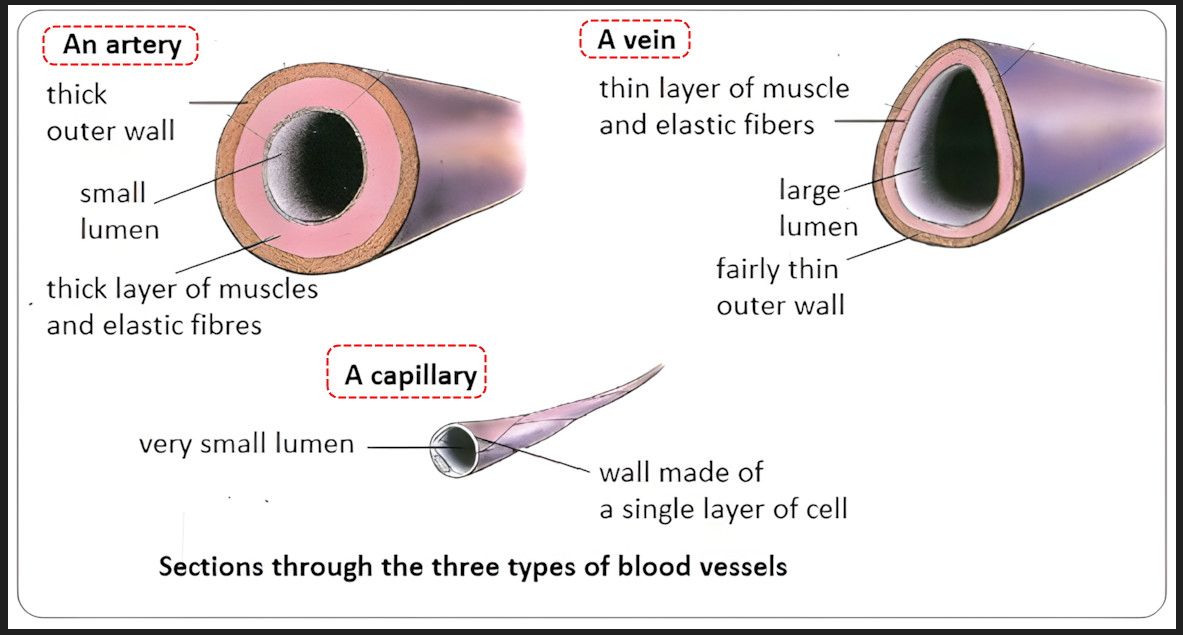
The three types of blood vessel all have different structures. The differences in wall thickness, wall composition, lumen size, and valves all match the function and blood pressure of each vessel.
Comparison Table #
| Feature | Artery | Vein | Capillary |
|---|---|---|---|
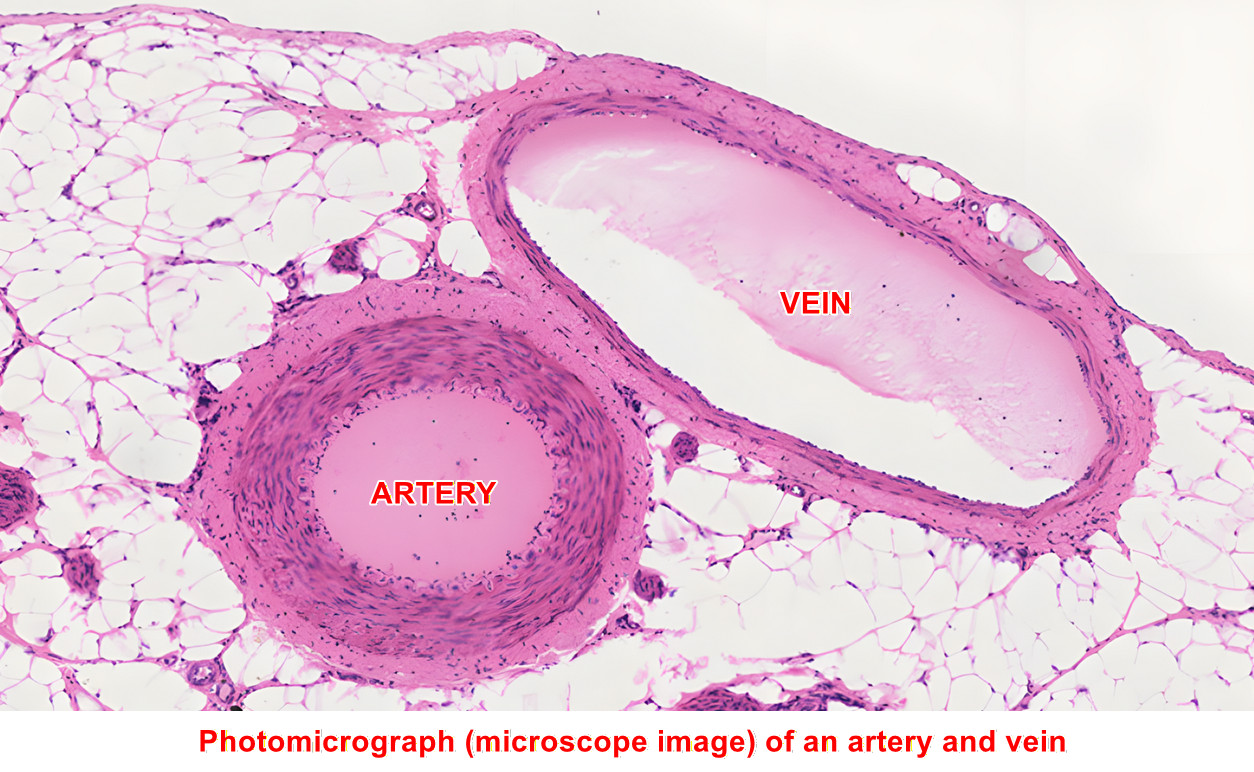
| Wall thickness | Very thick | Thinner than artery | One cell thick (extremely thin) |
| Muscle in wall | Lots of smooth muscle | Some smooth muscle (less than artery) | None |
| Elastic tissue in wall | Lots of elastic tissue | Some elastic tissue (less than artery) | None |
| Lumen diameter | Narrow (relative to wall) | Wide (relative to wall) | Very narrow — just wide enough for one red blood cell |
| Valves present? | No | Yes — valves along the length | No |
3. How Structure Relates to Blood Pressure #
Blood pressure is not the same throughout the circulatory system. It is highest when blood leaves the heart and drops as blood moves further away. The structure of each vessel matches the pressure it must handle.
| Vessel | Blood Pressure | How Structure Matches |
|---|---|---|
| Arteries | High — and varies (pulses) with each heartbeat |
|
| Veins | Low — steady, no pulse |
|
| Capillaries | Very low |
|
Syllabus Reference — Section 11.3: Blood Vessels #
- Name the main blood vessels that carry blood to and from the heart, lungs, liver and kidneys, limited to: aorta, vena cava, pulmonary artery, pulmonary vein, hepatic vein, hepatic artery, hepatic portal vein, renal artery and renal vein
- Describe, and identify on diagrams and photomicrographs, the structure of arteries, veins and capillaries,
limited to:
(a) relative thickness of wall
(b) composition of wall (muscle and elastic tissue)
(c) diameter of lumen
(d) presence of valves - Explain how the structure of arteries, veins and capillaries is related to the pressure of the blood that they transport


