
Blood is a liquid tissue that travels through blood vessels to reach every part of the body. It is made up of four main components — red blood cells, white blood cells, platelets, and plasma — and each one has a specific job to do.
1. The Components of Blood #
Blood is not a simple liquid — it is a mixture of cells and fluid. The four components are:
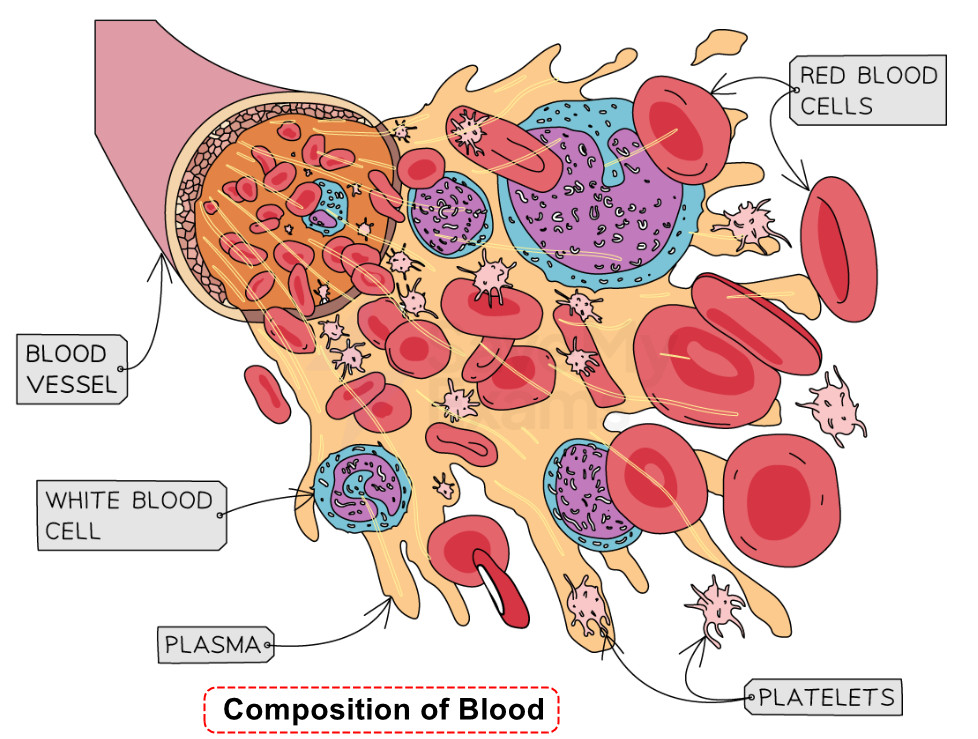
| Component | What it is |
|---|---|
| Red blood cells | Tiny disc-shaped cells that carry oxygen |
| White blood cells | Larger cells that defend the body against disease |
| Platelets | Tiny cell fragments that help blood clot |
| Plasma | The pale yellow liquid that carries everything else |
2. Red Blood Cells #
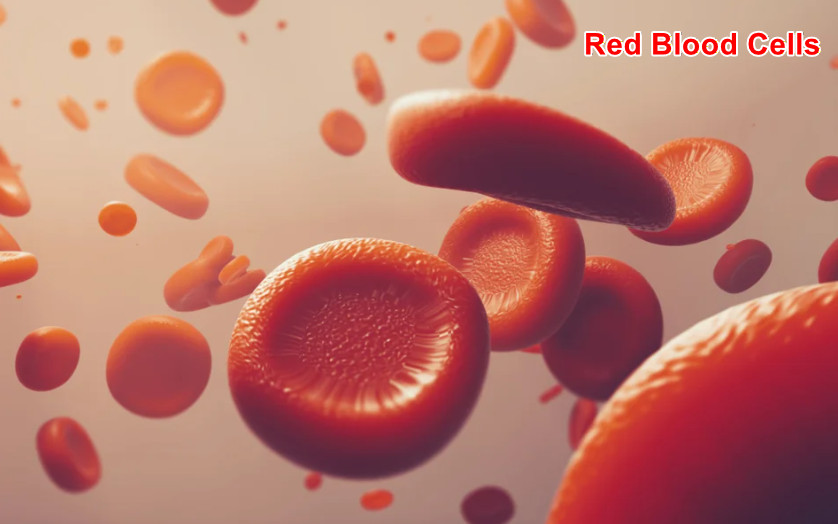
Red blood cells are the most common cells in blood. Their entire structure is designed for one purpose: carrying oxygen from the lungs to every cell in the body.
Structure #
- Biconcave disc shape — flattened with a dip in the centre on both sides. This gives a large surface area for absorbing oxygen quickly.
- No nucleus — the nucleus is lost as the cell develops, leaving more space for haemoglobin.
- Filled with haemoglobin — a red protein that carries oxygen.
How to Identify Under the Microscope #
- Small, round, pinkish cells
- Pale centre (where the cell dips inward — less haemoglobin at the centre)
- No visible nucleus
- Far more numerous than white blood cells
3. White Blood Cells #
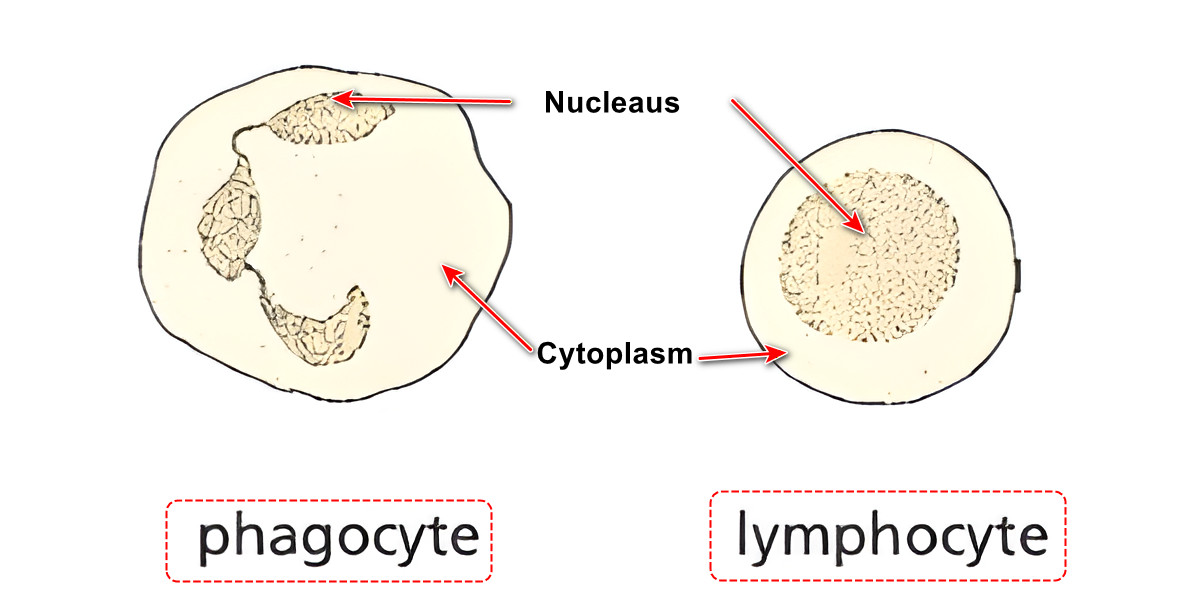
White blood cells (also called leucocytes) are part of the immune system. They protect the body against pathogens (bacteria, viruses, and other harmful organisms). There are two main types you need to know: lymphocytes and phagocytes.
Lymphocytes #
- Large, round nucleus that fills most of the cell
- Produce antibodies — proteins that target specific pathogens
- Antibodies attach to pathogens, marking them for destruction or making them harmless
Phagocytes #
- Irregular or lobed nucleus, more visible cytoplasm
- Engulf and digest pathogens — a process called phagocytosis
- They surround the pathogen and absorb it, then break it down with enzymes
How to Identify Under the Microscope #
| Feature | Lymphocyte | Phagocyte |
|---|---|---|
| Nucleus shape | Large, round, fills most of the cell | Lobed or irregular shape |
| Cytoplasm | Thin ring around nucleus | More cytoplasm visible |
| Size | Smaller white blood cell | Larger white blood cell |
4. Platelets #
Platelets are tiny fragments of cells — they have no nucleus and are much smaller than red or white blood cells. Their job is to stop bleeding when a blood vessel is damaged.
How Blood Clotting Works #
When a blood vessel is damaged, platelets trigger a reaction that converts soluble fibrinogen (a protein dissolved in plasma) into insoluble fibrin. Fibrin threads form a mesh that seals the wound as a clot.
Fibrin — the insoluble form; it forms solid threads that create the clot mesh.
5. Plasma #
Plasma is the liquid part of blood. It is a pale yellow fluid made mostly of water, and it acts as the transport medium for almost everything that blood carries.
Plasma transports the following substances around the body:
| Substance | Where it goes / why it is transported |
|---|---|
| Blood cells | Red blood cells, white blood cells, and platelets all float in plasma |
| Glucose | From the small intestine to all body cells for respiration |
| Amino acids | From the small intestine to cells for making proteins |
| Ions | Mineral salts (e.g. sodium, potassium) needed for cell function |
| Hormones | Chemical messengers from glands to their target organs |
| Carbon dioxide | From body cells (as a waste product of respiration) to the lungs to be breathed out |
| Urea | From the liver (where it is made from excess amino acids) to the kidneys to be removed in urine |
| Vitamins | Absorbed from food and distributed to where they are needed |
| Plasma proteins | Proteins dissolved in plasma (including fibrinogen, which is used in clotting) |
6. Transfer of Substances — Capillaries, Tissue Fluid, and Body Cells #
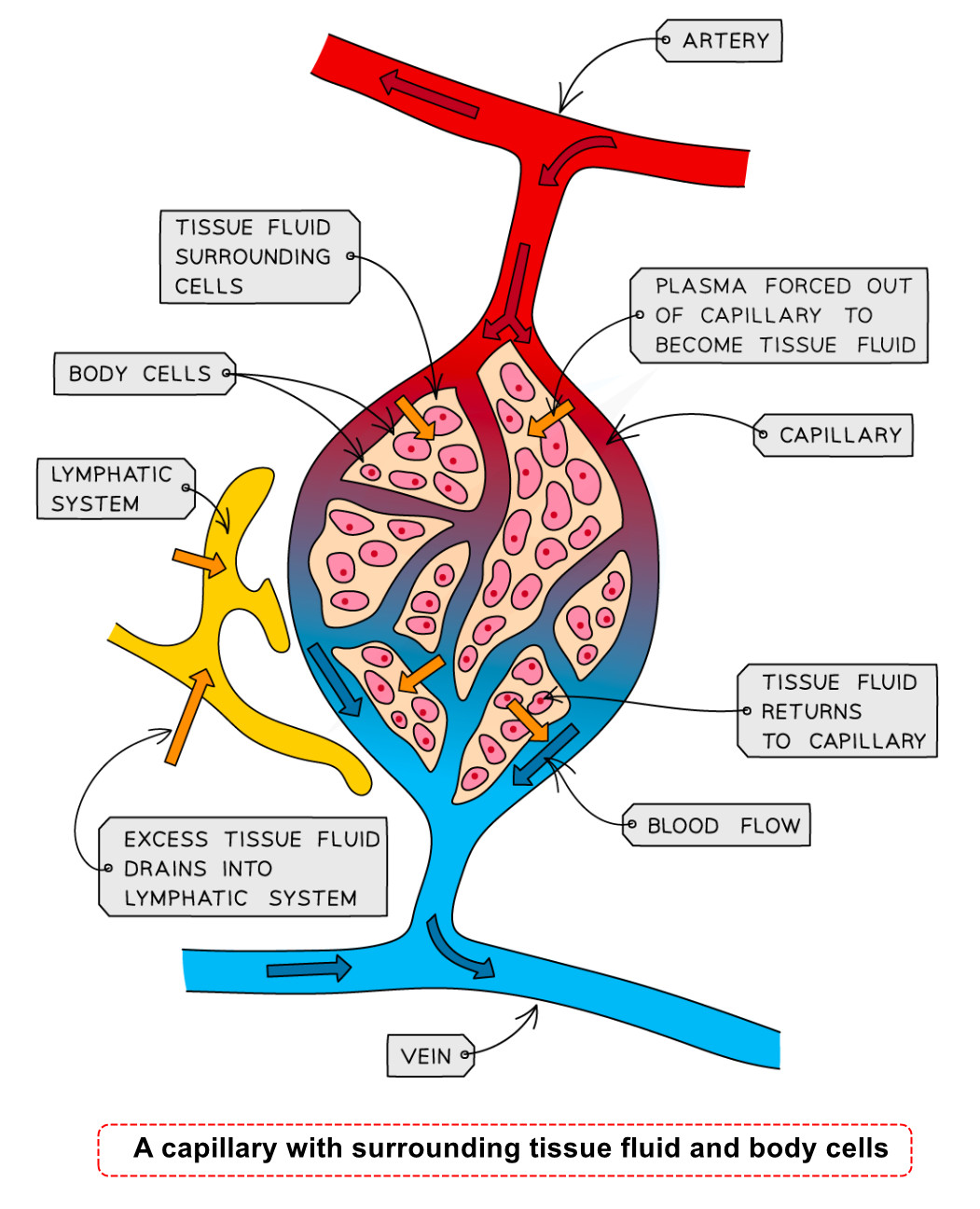
Blood cannot deliver substances directly into body cells — it stays inside blood vessels. Instead, substances pass through an intermediate step called tissue fluid.
What is Tissue Fluid? #
How Tissue Fluid Forms #
At the arterial end of a capillary (where blood arrives from arteries), blood pressure is relatively high. This pressure pushes water, glucose, oxygen, and other small dissolved substances out through the thin capillary walls into the spaces around cells, forming tissue fluid.
- Blood cells and large plasma proteins are too big to pass through the capillary wall — they stay inside the blood.
- Small molecules (glucose, oxygen, ions, amino acids, hormones) pass through easily.
Exchange Between Tissue Fluid and Body Cells #
Once tissue fluid surrounds the cells, substances move by diffusion — from where they are in high concentration to where they are in low concentration:
| Direction of movement | Substances | Reason |
|---|---|---|
| Tissue fluid → body cells | Oxygen, glucose, amino acids, hormones | Cells use these substances, so concentration inside cells is lower |
| Body cells → tissue fluid | Carbon dioxide, urea, other waste products | Cells produce these as waste, so concentration inside cells is higher |
Return of Tissue Fluid to Blood #
At the venous end of the capillary (where blood flows towards veins), blood pressure is lower. Most of the tissue fluid is reabsorbed back into the capillary.
Syllabus Reference — Section 11.4: Blood #
- Identify red and white blood cells (lymphocytes and phagocytes) as seen under the light microscope on prepared slides, and in diagrams and photomicrographs
- List the components of blood as red blood cells, white blood cells, platelets and plasma
- State the functions of the components of blood:
(a) red blood cells — oxygen transport
(b) white blood cells — antibody production by lymphocytes and engulfing pathogens by phagocytes
(c) platelets — clotting by converting soluble fibrinogen to insoluble fibrin to prevent blood loss and the entry of pathogens
(d) plasma — transport, limited to: blood cells, ions, glucose, amino acids, hormones, carbon dioxide, urea, vitamins and plasma proteins - Describe the transfer of substances between blood in capillaries, tissue fluid and body cells


