
- J1.1 Worship in the Synagogue
- J1.2 Key Features of a Synagogue
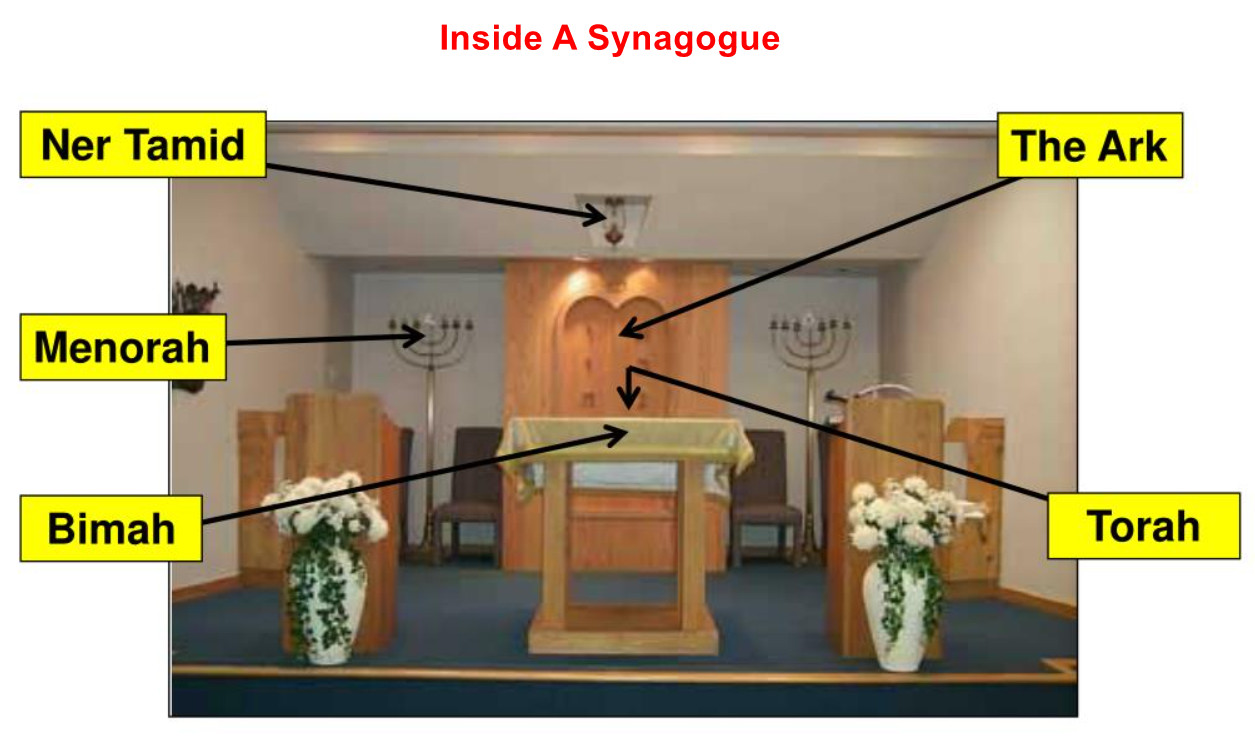
- Aron ha-kodesh (Holy Ark)
- Sefer Torah (Torah scrolls)
- Bimah (raised reading desk)
- Ner tamid (eternal light)
- Ten Commandments (two tablets of the Law)
- Menorah (seven-branched candlestick)
- Magen David (Star or Shield of David)
- The absence of representations of God, statues or pictures
- Seating of women and men
- J1.3 Artefacts Used in Worship
- J1.4 Jewish Ritual Dress
For Jewish people, worship is a central part of life. It is the way they show love and respect for God and stay connected to their faith and community. This topic looks at the synagogue (the main building for Jewish worship), the special features and artefacts used there and at home, and the ritual dress that many Jewish people wear when they pray. As you read, notice that different Jewish communities (such as Orthodox and Reform) sometimes do things in different ways.
J1.1 Worship in the Synagogue #
The synagogue as a centre for Jewish worship #
The synagogue is the main building where Jewish people meet to worship God. The word “synagogue” means “to bring together” or “house of assembly”. The name itself tells us its main purpose: it is a place where people come together.
The building used for Jewish worship. The word means “to bring together” or “house of assembly”.
As a centre for worship, the synagogue is where Jewish people:
- Gather to pray together as a group, especially on Shabbat (the Jewish holy day) and during festivals.
- Read and listen to the Torah (Jewish holy law), which is read aloud during services.
- Worship as a community rather than only on their own at home.
The synagogue as the centre of the Jewish community #
The synagogue is much more than a place to pray. It is also the centre of the wider Jewish community. It brings people together for many parts of daily life, not just for worship.
The synagogue is often used as:
- A place of study, where children and adults learn about their faith, the Torah and Hebrew.
- A meeting place, where people come together to talk, support one another and feel part of a group.
- A place for important life events and celebrations that the community shares together.
J1.2 Key Features of a Synagogue #
Inside a synagogue there are several important features. Each one has a special meaning and helps with worship. Different Jewish communities may arrange these features in slightly different ways, but most of them are found in synagogues everywhere.
Aron ha-kodesh (Holy Ark) #
The Aron ha-kodesh, or Holy Ark, is a special cupboard set into the wall that faces towards Jerusalem. It is the most holy place in the synagogue because it holds the Torah scrolls. Worshippers usually face this direction when they pray. People stand up when the Ark is opened, to show respect.
Sefer Torah (Torah scrolls) #
The Sefer Torah are the Torah scrolls kept inside the Holy Ark. They contain the holy Jewish law, hand-written in Hebrew. They are treated with great care and respect because they hold God’s words.
Bimah (raised reading desk) #
The Bimah is a raised platform with a reading desk. The Torah scrolls are placed here and read aloud during services. Because it is raised, everyone in the synagogue can see and hear the reading clearly.
Ner tamid (eternal light) #
The Ner tamid, or eternal light, is a lamp that is kept burning all the time above the Holy Ark. It is never allowed to go out. It reminds Jewish people of God’s constant presence, which is always with them.
Ten Commandments (two tablets of the Law) #
Many synagogues display the Ten Commandments, often shown as two tablets of the Law. These are usually placed above the Holy Ark. They remind worshippers of the laws that God gave to the Jewish people.
Menorah (seven-branched candlestick) #
The Menorah is a seven-branched candlestick. It is an old and important symbol of Judaism and is often found in the synagogue. It reminds Jewish people of their history and faith.
Magen David (Star or Shield of David) #
The Magen David, meaning the Star or Shield of David, is a six-pointed star. It is a well-known symbol of Judaism and the Jewish people, and is often seen in and on synagogues.
The absence of representations of God, statues or pictures #
One important feature of a synagogue is what is not there. There are no images of God, no statues of humans and no pictures of people. This is because Jewish teaching says God should not be shown as a picture or statue. Avoiding these images helps people worship God directly, without anything getting in the way.
Seating of women and men #
The way men and women sit in the synagogue is different in different Jewish traditions:
| Tradition | Seating arrangement |
|---|---|
| Orthodox | Men and women sit separately. Women often sit in a separate area, such as a balcony or a section divided by a screen. |
| Reform | Men and women usually sit together, often as families. |
J1.3 Artefacts Used in Worship #
Jewish worship uses several special objects, called artefacts. Some are used in the synagogue and some are used at home, especially during Shabbat. Each one has its own use, meaning and importance. Different Jewish communities may use them in slightly different ways.
Copies of the Sefer Torah #
The Sefer Torah (Torah scrolls) are the most important artefact in worship. The copies kept in the synagogue are hand-written with great care. They are read aloud during services. They are so respected that people do not touch the writing directly — a pointer is used instead. This shows how holy the words of the Torah are.
Shabbat candles #
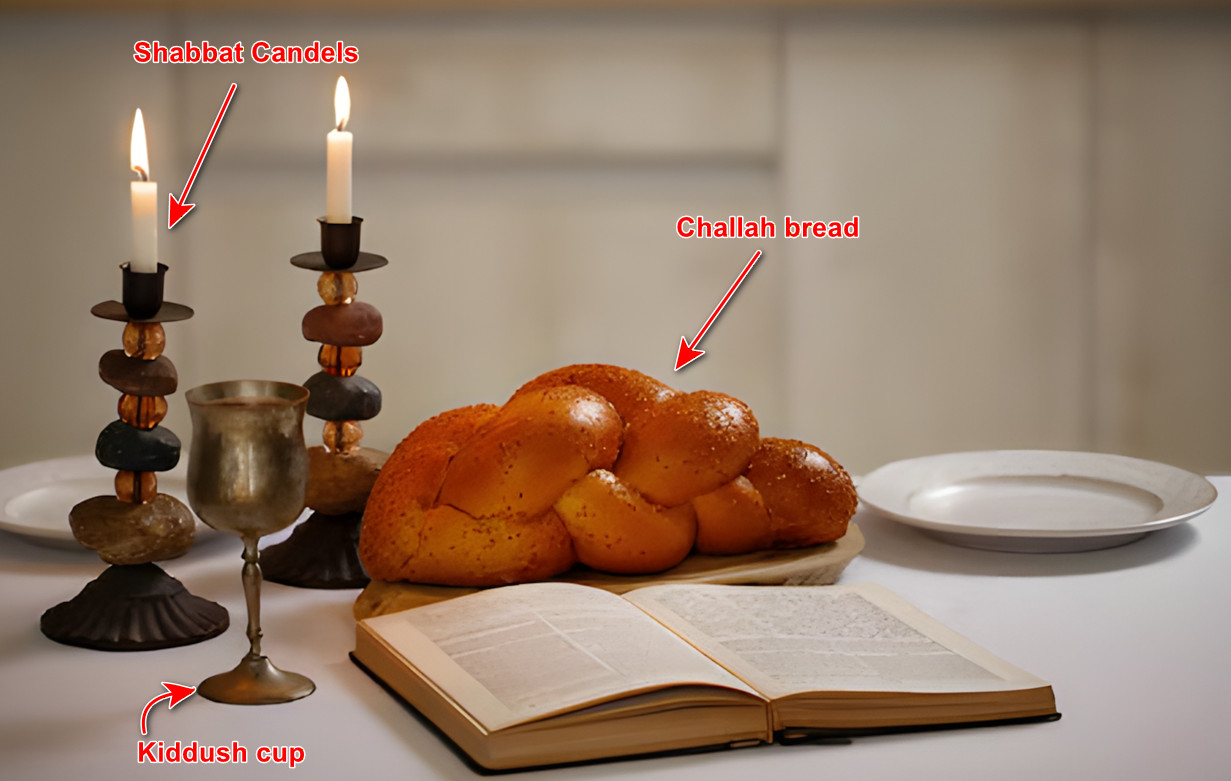
Shabbat candles are lit at home to welcome Shabbat, the Jewish day of rest. Lighting the candles marks the start of this special, holy time. It brings light and a peaceful feeling into the home.
Challah (plaited bread) #
Challah is a special plaited (braided) bread eaten during Shabbat meals. Usually two loaves are used. The bread is an important part of the Shabbat meal and helps make the day feel special and holy.
Kiddush cup #
The Kiddush cup is a special cup that holds wine (or grape juice). It is used to say a blessing at the start of Shabbat and festivals. The blessing over the cup helps to make the day holy and set apart from ordinary days.
Mikvah #
The Mikvah is a special bath used for washing in a religious way. It is used at certain important times to make a person spiritually clean and ready. It is about religious cleanliness, not ordinary washing.
Mezuzah, with reference to the Shema #
The Mezuzah is a small case fixed to the doorpost of a Jewish home. Inside it is a small scroll that contains words from the Shema, an important Jewish prayer. Many Jewish people touch the Mezuzah as they pass through the door, as a reminder of God and their faith.
An important Jewish prayer about loving God. Its words are written on the small scroll placed inside the Mezuzah.
J1.4 Jewish Ritual Dress #
When they pray, many Jewish people wear special ritual dress. Each item has its own meaning and symbolism. Whether these items are worn, and who wears them, can be different in different Jewish traditions.
Tallit (prayer shawl) #
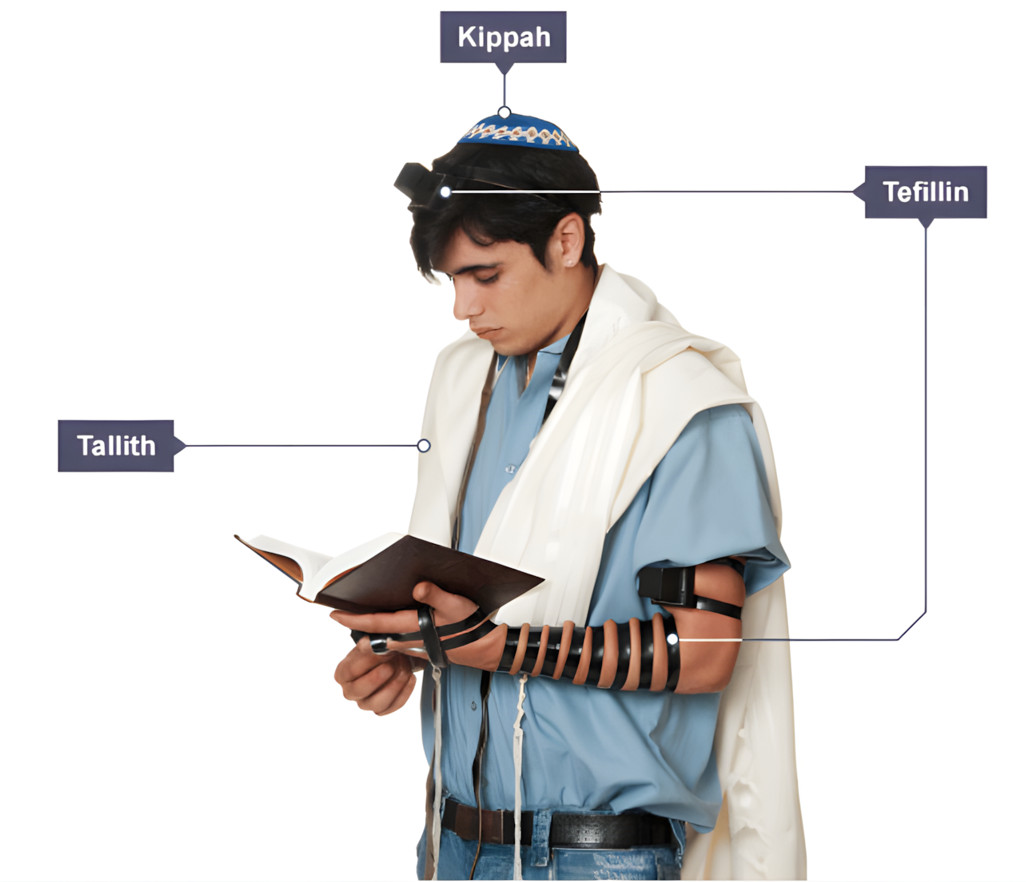
The Tallit is a prayer shawl worn during prayer. It has six hundred and thirteen (613) tzitzit, which are special tassels (knotted threads) at its corners. These tassels remind the wearer of God’s commandments (rules), helping them to remember to follow them.
Tefillin (phylacteries) #
Tefillin, also called phylacteries, are two small leather boxes joined to leather straps. They contain words from the holy texts. During weekday prayers, one box is placed on the arm and the other on the head, and the straps are wound around the arm and hand. This shows that the worshipper serves God with their actions (arm) and their thoughts (head).
Kippah / yarmulke (skull cap) #
The Kippah (also called a yarmulke) is a small skull cap worn on the head. It is a sign of respect for God. Wearing it reminds the person that God is always above them.
When ritual dress is worn and who wears it #
There are different views in different Jewish traditions about when ritual dress is worn and who wears it:
| Tradition | Views on ritual dress |
|---|---|
| Orthodox | Items such as the tallit and tefillin are usually worn by men for prayer. |
| Reform | Both men and women may choose to wear items such as the tallit and kippah. |


